Thursday, October 4, 2007
CBS's CSI: Doin' one for the Kids
I understand that cop dramas like Law and Order need to have convoluted plots. Nobody wants to watch an hour of television just to find out that the butler actually did do it. Hell, half of Criminal Intent's stories end up involving the NSA or some other such government agency. CBS' CSI has really pushed the cop drama to a new level though, with a plot involving Gary Sinise going into the virtual world Second Life to catch a computer program. The New York Times has already had a fun time going after the creators of CSI. I want to point out, specifically though, how funny it is that CBS is doing this to attract younger audiences, as if our attention spans are so cheaply bought. "Oh man, Murder She Wrote's got an IPhone featured in the next episode..."

Let's be honest, when we say constructive criticism we mean "ass-kissing"
Damn, it sucks that you can't see this whole strip. But click on it to enter a world of magic.

Shines

The fragility of life and our innate survival instincts never juxtapose more than in the aftermath of unexpected tragedy. And when they collide, nothing is the same. Such is Sin-ae’s heartbreaking fate; Secret Sunshine, the new film by South Korean director Lee Chang-dong, is her story.
Secret Sunshine screened at the Time Warner Center on Monday and Tuesday this week as a part of the
But tragedy finds Shin-ae in Milyang too, and her life once again becomes unrecognizable. She continues on, fumbling and absorbed, unaware of the secret sunshine (the literal translation of the name of the town) that Lee weaves adeptly through the film. Gentle humor, well-intentioned friends and neighbors, and a bit of fun poking at the institution of Christianity—it’s life, unstoppable.
Jeon deservingly took home the Best Actress prize at the Cannes Film Festival this year for her incredible performance, but Secret Sunshine’s success is the net effect of countless deserving performances both on and off the screen. I could not conclude this review without mentioning Song Kang-ho, who plays a jovial, kind-of-nerdy auto mechanic madly in love with Shin-ae—he stands by her patiently, an unfaltering friend—to perfection.
Wednesday, October 3, 2007
The Misanthrope at the NY Theatre Workshop
 Alceste, furiously mixing the spaghettis and the chocolate*.
At one point in the play, in a (post-modern?) emphatic gesture Alceste, the excessive and constantly irritated main character climbs on the lunch table and pours the entire meal over his head (spaghettis, ketchup, chocolate and whatever he comes across) before inserting a sausage in his pants. This moment qualifies as one of “the many arguably freakish, undeniably stimulating liberties put forth by Ivo Van Hove in his provocative gloss on The Misanthrope [Eric Grode in the NY Sun]. The characters make frequent use of their cell phones, play Second Life on their laptop and are being filmed at the same time –so far, nothing unacceptable.
What is interesting is how a 17th century play can still make perfect sense right now, in a different context. The problem is that The Misanthrope is built upon a fairly complex argument (which made as much sense when it was written as it does now) supported by equally complex characters. And the NY Sun article rightly quotes the following (from 1965) : "Molière's comedy, because it is so thoroughly ‘written,' resists the overextension of any thesis".
The NY Theatre Workshop is showing a new, modern translation (by Tony Harrison). There is nothing wrong with desacrilizing a text or an author, as long at its meaning is somewhat retained: but Harrison’s text strikes me as a bad modern translation (combined with Van Hove’s direction, it is even worse). “Mr. Van Hove's gut renovations of the classics” (like Hedda Gabler) doesn’t really work this time because the mise en scene doesn’t work with a text that is already weaker than the original. However exciting it may be (a modern Misanthrope!), the whole experience turns out to be pretty frustrating. The fact that the actors are trapped in a transparent loft, all wearing the same suits and all seemingly alienated by corporate culture grossly simplifies the meaning of the text. “Where’s the friction between substance and surface?” asks Ben Brantley in the Times. The argument of the play seems reduced to a stupid debate between silly people (should one always speak his mind / or should one compromise and lie for the sake of social peace?). Moliere’s play isn’t prescriptive, whether you should hate everybody or not is not the point. But except for Alceste (Bill Kamp), everyone else in Van Hove’s play is equally superficial and self-centered and indeed it makes you want to pour ketchup on yourself. It also makes you wonder why you should care for this play if it’s nothing else than empty –poorly written- chatting ("bavardage").
*He's the misanthrope.
Monday, October 1, 2007
Radiohead Releases New Album - Music Industry Vomits in its Mouth

Only Radiohead could have done this. The Oxford quintet had fans “WTF?!"ing across the planet when they announced today that their seventh LP, In Rainbows, would be available for download in ten short days. An album folks barely knew existed can be on their iPods in less than two weeks. You can pre-order the fool thing today and pay whatever amount you can afford! Fans can also pre-order something called a “discbox”(available to ship on or after December 3rd) that contains the full album plus a bunch of extra tracks on LP, a code allowing purchasers to download the album digitally, and Radiohead’s infamously cryptic album art. With the discbox running upwards of £40 ($81), it might make more sense to hold out for the basic CD which should be available early next year.
This is truly unprecedented behavior – particularly for one of the most commercially and critically successful rock acts in the Western world. Suddenly Britain’s consummate musical innovators are now certified marketing innovators. Radiohead’s provocative sales plan has everything to do with the fact that the boys have managed to extricate themselves form the major label grind. Their contract with EMI/Capitol ended after the release of 2003’s Hail to the Thief. Throughout the recording of In Rainbows, bets were laid on the band’s next move. Would they go major, indie, or go it alone? Thom and co. refused much comment (though the release of Thom’s solo effort, The Eraser, on indie stalwarts XL, at least suggested their minds were open to change.)
Now we know. Radiohead are the taking the piss out of the music industry and releasing one of the most anticipated records in years on their own. The details of their marketing plan – what amounts to an officially-sanctioned leak of the album combined with a premium/super-deluxe/balls-out LP, before the release of the regular CD – points to deep fissures developing in the music industry. The split here is between content (the actual music) and packaging (the value-adds, the artwork, the stuff you can hold in your hands). Content is ubiquitous. Everyone, including Radiohead, assumes access to the music. If the band didn’t “leak” the album themselves, someone else would. But people will still pay for packaging – particularly rabid Radiohead fans hungry for Stanley Donwood’s album art. Hence the $81 double LP – an LP that crucially doesn’t prohibit access to mp3s and the convenience of iPod portability.
Finally, it’s no coincidence that the CD is hitting shelves last and that it isn’t even available for pre-order. If you can download the album digitally for nearly nothing or pay a few bucks and get the album on digital and analog formats along with your weight in add-ons, why pay $18 for a piece of plastic?
Sunday, September 30, 2007
Darjeeling Limited/ How can a train be lost –it’s on rail ?
 Wes Anderson's Darjeeling Limited looks something like the Marx Brothers in the Orient Express with an endless supply of cough medicine to get high. Three nonchalant and clumsy brothers (look for the noses) travel together in a train through India (at first a neo-hippie retreat and the world’s greatest rehab center) in a climate of generalized suspicion. This fragile journey rests on an impossible pact (“say yes to everything!”).
A.O.Scott, in his review of the film points at two articles : a positive portrait by David Amsden in New York Magazine (with a photograph of Anderson “in his favorite taxidermy shop in Paris” thank you very much) and one in The Atlantic discussing his place in popular culture (“The unbearable lightness of Ira Glass, Wes Anderson..” etc).
In the Atlantic, Anderson is labeled and paired up with other “paragons of indie sensibility.” Indeed, to many in Europe and elsewhere Anderson is as the incarnation of American indie cinema (watching his films is in a way a moral duty, by way of which you contribute to a larger battle against Hollywood's superproductions and so on). That Anderson, like Michel Gondry, be so enthusiastically endorsed by hipsters can be annoying. But this -descriptive- essay doesn’t say much about the intrinsic qualities of his work.
On the other side, Amsden describes Anderson as new kind of termite artist, “European in his obsession with aesthetics” –I sort of see what he means but it is difficult to agree.
Hirschorn fears that contemporary quirk will become “an end in itself” (easy temptation!). Anderson seems aware of that problem (how could he not be) and then goes on to elude what seems like a rhetorical question (do filmmakers always make the same movies?).
One usually goes to see a Wes Anderson film based on vague assumptions: there will be predictable camera tics, it will be “ridiculous” and “absurd” (and, hopefully, funny).
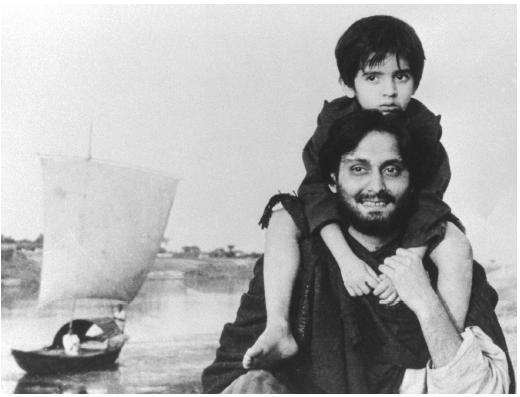
As Scott points out, Darjeeling Limited is “precious” -because of its decorative qualities and the director’s great sense for details. Yet it isn’t complacent and forced as it could be –it is actually pretty great. Not because it isn’t frivolous (that it deals with life and death has nothing to do with it and I agree with Scott that the episode of the Indian child’s death is unnecessary to back up the story –but maybe it is part of the tribute to Satyajit Ray’s Apu trilogy).
The prologue of the film, Hotel Chevalier, is available on Itunes for free.
Quirkiness vs. "Quirk"
One commenter to this blog recently said, about the Helvetica documentary and related press,
“…a lot of this strikes me as literary narcissism. Is this just about writers talking shop or is there a genuinely worthwhile cultural conversation happening here? Do we think Luc Sante is a man of egalitarian principles because he uses a font that accords the same amount of space to each letter, "which I think is only fair to the i and the l"? Not particularly.”
To this I have to say, what do you have against literary narcissism? I may not think that Luc Sante is a “man of egalitarian principle” but I do find his attachment to a font endearing and revealing.
This brings me to the recently ubiquitous bitching about "quirkiness."
Take Michael Hirschorn’s recent tirade “Quirked Around.” I don’t understand the impetus to glorify his preferences via an ironic elitism that favors Judd Apatow over Wes Anderson. Hirschorn is affecting a contrarian snobbishness—the kind that drives people to talk about a surprisingly good “big” comedy as though it is the apex of contemporary art, while dismissing cult favorites for the very things that make them beloved. In this case, his normally gleeful populism (he is a programmer for VH1 after all) feels forced. He forgets that the elusive quality of quirkiness came before the cute aesthetic neologism “Quirk,” and if it is the driving force behind certain entertainments, maybe that’s because it makes people’s work unique and gives it style. That’s why people listen to This American Life, not because it’s cool. Public radio may now be nerdy-chic, but don’t forget the nerdy still comes first. And to criticize the show for having a formula…isn’t that tantamount to picking on the very idea of having an aesthetic style altogether?
I don’t think that’s what Hirschorn means to do. I think he is trying to pinpoint a specific “genre,” and he’s on the right track, connecting TAL with Anderson’s films, but he has opted lazily to write the whole thing off via rambling criticisms of these two examples rather than do the painstaking anthropological work of flushing out the categorization. Let’s face it, everyone loved Knocked Up, but it says more about a person that they love Ira Glass, or Helvetica. And Wes Anderson’s aesthetic is hardly in danger of taking over all of cinema.
Hirschorn recently asked, “Is there an easier position to take in polite society than to patronize reality TV?” Now it feels like he is taking the easy way out by joining his fellow appliers of quotation marks on the derision bandwagon. But “Mumblecore” hit on something. Even Melvin Jules Bukiet’s spurious whine about “Brooklyn Books of Wonder” offers a little bit of the pleasure of recognition in its specificity. I suppose the very process of defining something involves a bit of tearing down, but that makes it all the more important to have a subject a little more manageable than Indie-ness in general, i.e. weird stuff that not that many people like in the first place.
Subscribe to:
Posts (Atom)