 Wes Anderson's Darjeeling Limited looks something like the Marx Brothers in the Orient Express with an endless supply of cough medicine to get high. Three nonchalant and clumsy brothers (look for the noses) travel together in a train through India (at first a neo-hippie retreat and the world’s greatest rehab center) in a climate of generalized suspicion. This fragile journey rests on an impossible pact (“say yes to everything!”).
A.O.Scott, in his review of the film points at two articles : a positive portrait by David Amsden in New York Magazine (with a photograph of Anderson “in his favorite taxidermy shop in Paris” thank you very much) and one in The Atlantic discussing his place in popular culture (“The unbearable lightness of Ira Glass, Wes Anderson..” etc).
In the Atlantic, Anderson is labeled and paired up with other “paragons of indie sensibility.” Indeed, to many in Europe and elsewhere Anderson is as the incarnation of American indie cinema (watching his films is in a way a moral duty, by way of which you contribute to a larger battle against Hollywood's superproductions and so on). That Anderson, like Michel Gondry, be so enthusiastically endorsed by hipsters can be annoying. But this -descriptive- essay doesn’t say much about the intrinsic qualities of his work.
On the other side, Amsden describes Anderson as new kind of termite artist, “European in his obsession with aesthetics” –I sort of see what he means but it is difficult to agree.
Hirschorn fears that contemporary quirk will become “an end in itself” (easy temptation!). Anderson seems aware of that problem (how could he not be) and then goes on to elude what seems like a rhetorical question (do filmmakers always make the same movies?).
One usually goes to see a Wes Anderson film based on vague assumptions: there will be predictable camera tics, it will be “ridiculous” and “absurd” (and, hopefully, funny).
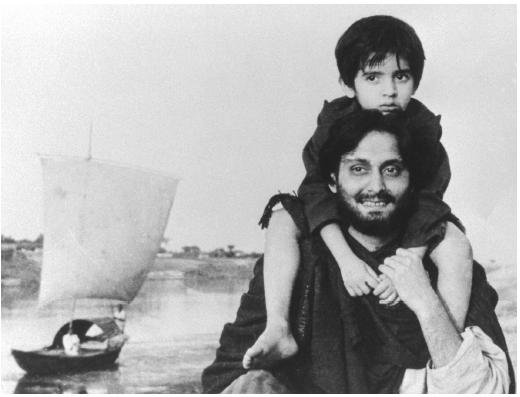
As Scott points out, Darjeeling Limited is “precious” -because of its decorative qualities and the director’s great sense for details. Yet it isn’t complacent and forced as it could be –it is actually pretty great. Not because it isn’t frivolous (that it deals with life and death has nothing to do with it and I agree with Scott that the episode of the Indian child’s death is unnecessary to back up the story –but maybe it is part of the tribute to Satyajit Ray’s Apu trilogy).
The prologue of the film, Hotel Chevalier, is available on Itunes for free.

No comments:
Post a Comment