Sunday, September 30, 2007

Darjeeling Limited/ How can a train be lost –it’s on rail ?

Wes Anderson's Darjeeling Limited looks something like the Marx Brothers in the Orient Express with an endless supply of cough medicine to get high. Three nonchalant and clumsy brothers (look for the noses) travel together in a train through India (at first a neo-hippie retreat and the world’s greatest rehab center) in a climate of generalized suspicion. This fragile journey rests on an impossible pact (“say yes to everything!”).

A.O.Scott, in his review of the film points at two articles : a positive portrait by David Amsden in New York Magazine (with a photograph of Anderson “in his favorite taxidermy shop in Paris” thank you very much) and one in The Atlantic discussing his place in popular culture (“The unbearable lightness of Ira Glass, Wes Anderson..” etc).
In the Atlantic, Anderson is labeled and paired up with other “paragons of indie sensibility.” Indeed, to many in Europe and elsewhere Anderson is as the incarnation of American indie cinema (watching his films is in a way a moral duty, by way of which you contribute to a larger battle against Hollywood's superproductions and so on). That Anderson, like Michel Gondry, be so enthusiastically endorsed by hipsters can be annoying. But this -descriptive- essay doesn’t say much about the intrinsic qualities of his work.
On the other side, Amsden describes Anderson as new kind of termite artist, “European in his obsession with aesthetics” –I sort of see what he means but it is difficult to agree.

Hirschorn fears that contemporary quirk will become “an end in itself” (easy temptation!). Anderson seems aware of that problem (how could he not be) and then goes on to elude what seems like a rhetorical question (do filmmakers always make the same movies?).

One usually goes to see a Wes Anderson film based on vague assumptions: there will be predictable camera tics, it will be “ridiculous” and “absurd” (and, hopefully, funny).
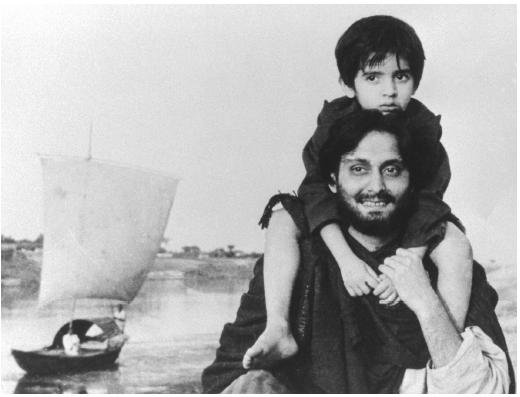
As Scott points out, Darjeeling Limited is “precious” -because of its decorative qualities and the director’s great sense for details. Yet it isn’t complacent and forced as it could be –it is actually pretty great. Not because it isn’t frivolous (that it deals with life and death has nothing to do with it and I agree with Scott that the episode of the Indian child’s death is unnecessary to back up the story –but maybe it is part of the tribute to Satyajit Ray’s Apu trilogy).

The prologue of the film, Hotel Chevalier, is available on Itunes for free.

Quirkiness vs. "Quirk"

One commenter to this blog recently said, about the Helvetica documentary and related press,

“…a lot of this strikes me as literary narcissism. Is this just about writers talking shop or is there a genuinely worthwhile cultural conversation happening here? Do we think Luc Sante is a man of egalitarian principles because he uses a font that accords the same amount of space to each letter, "which I think is only fair to the i and the l"? Not particularly.”

To this I have to say, what do you have against literary narcissism? I may not think that Luc Sante is a “man of egalitarian principle” but I do find his attachment to a font endearing and revealing.

This brings me to the recently ubiquitous bitching about "quirkiness."

Take Michael Hirschorn’s recent tirade “Quirked Around.” I don’t understand the impetus to glorify his preferences via an ironic elitism that favors Judd Apatow over Wes Anderson. Hirschorn is affecting a contrarian snobbishness—the kind that drives people to talk about a surprisingly good “big” comedy as though it is the apex of contemporary art, while dismissing cult favorites for the very things that make them beloved. In this case, his normally gleeful populism (he is a programmer for VH1 after all) feels forced. He forgets that the elusive quality of quirkiness came before the cute aesthetic neologism “Quirk,” and if it is the driving force behind certain entertainments, maybe that’s because it makes people’s work unique and gives it style. That’s why people listen to This American Life, not because it’s cool. Public radio may now be nerdy-chic, but don’t forget the nerdy still comes first. And to criticize the show for having a formula…isn’t that tantamount to picking on the very idea of having an aesthetic style altogether?

I don’t think that’s what Hirschorn means to do. I think he is trying to pinpoint a specific “genre,” and he’s on the right track, connecting TAL with Anderson’s films, but he has opted lazily to write the whole thing off via rambling criticisms of these two examples rather than do the painstaking anthropological work of flushing out the categorization. Let’s face it, everyone loved Knocked Up, but it says more about a person that they love Ira Glass, or Helvetica. And Wes Anderson’s aesthetic is hardly in danger of taking over all of cinema.

Hirschorn recently asked, “Is there an easier position to take in polite society than to patronize reality TV?” Now it feels like he is taking the easy way out by joining his fellow appliers of quotation marks on the derision bandwagon. But “Mumblecore” hit on something. Even Melvin Jules Bukiet’s spurious whine about “Brooklyn Books of Wonder” offers a little bit of the pleasure of recognition in its specificity. I suppose the very process of defining something involves a bit of tearing down, but that makes it all the more important to have a subject a little more manageable than Indie-ness in general, i.e. weird stuff that not that many people like in the first place.

Saturday, September 29, 2007

DUMBO


Cabbages on lightposts.The hunt for an elephant that paints (really). Stacks and stacks of iron stairs to climb, chasing abstract arrows to an artist’s open studio. A net, strung with glittering decoupage. The smell of Barbosal; $2 PBR. At least a half-dozen wedding parties—layers of ruffles; aqua, pink, chocolate brown, bobby pins and smiles—oblivious until they arrived. This was DUMBO’s Under the Bridge Festival, Saturday afternoon.

I adore festivals unconditionally; art, beer, books are among my favorite excuses. I particularly love festivals that I leave, inspired. The day is warm, sunny. Jeans, layered tanks, sunglasses, Converse. It’s not winter yet—yet. I hoard information in my satchel, constantly scanning, constantly scouring the flyers, the upcoming shows. It’s the hopefulness. I hoard the feelings of the day, determined to catalogue, so that in February I can remember it.

Rotten Fruit


Well, well well. Looks like the apple doesn’t fall far from the tree. I was reminded of that quasi biblical-sounding adage while watching Jenna Bush last night on 20/20. The younger, “ditzier” Bush twin, ersatz authoress and recently engaged 25 year old was pimping her new book, Ana’s Story for Diane Sawyer--her first sit down interview, like, ever!

But nobody really gives a shit about Jenna's narcissistic endeavors here. Dedicating an hour to the foray outside of "Bush World," to borrow a Maureen Dowdism, entailed grappling with a great deal of ineloquence and of course, evasiveness. For those who do care, Jenna traveled to the Caribbean and Latin America, where she spent time talking to young women and children suffering from HIV and AIDS. Jenna brought Diane and Co. down to Jamaica to, I don't know, "re-enact" her experiences there?

Unfortunately, Jenna's trip abroad simply came across as self-serving, indulgent even, kind of like one of those "spiritual journeys" whereby enlightenment comes from realizing how much it must suck never to be able to leave such god forsaken places and go home to the good ol' U.S. of A... and then write a book about it.

Jenna has a habit of narrowing her already beady eyes when faced with questions she doesn't want to answer. Diane wasn't exactly softballing it here, but anything that didn't pertain to the book clearly made her uncomfortable. And, like her father, she gets a little petulant when prodded. Iraq was clearly a sore topic. Diane graciously showed the clip of Matt Damon's infamous Hardball spot, where he effectively asked whether the twins shouldn't also be fighting overseas like so many poor and working-class Americans. What did she think of it? Jenna's response could have come straight from her doofy Dad: "Obviously I understand that question and see what, what the point of that question is, for sure." Uh huh.

My favorite part of the whole interview/pr campaign was Jenna's "covert" infiltration of a Kingston slum. Having found an AIDS-afflicted woman willing to speak on camera, Jenna listened solemnly, nodding blankly. The woman told Jenna that she likely wouldn't find decent work anytime soon. "You can still get a good job. You can still get a great job," she reassured her. Right.

Then, Diane told the woman who Jenna actually was: The President's Daughter. Her eyes widened. Visibly flummoxed, the woman didn't know whether to believe them. "But you’re so simple," she said. Turning to the cameras, smiling now, "she’s so simple."

And You Thought You Couldn't Sing


I have to site The New Yorker's Sasha Frere-Jones, here. He alerted me to this gloriously ridiculous new development in thrash metal - animal lead-singers. There's Brooklyn's own Caninus, lead by two pit bull terriers named Budgie and Basil, and there's Hatebeak (yes, Hatebeak), led by a parrot (what the band describes lovingly as an "avian vocalist.") Caninus (myspace.com/caninus) and Hatebeak (myspace.com/beak666) recently released a split EP, "Bird Seeds of Vengeance," on Reptilian Records.

There does seem to be some motive to the madness. Caninus are strict vegans, while Hatebeak asks visitors to their myspace page to donate to the Wildlife Warriors Foundation. Caninus explains further: "the majority grindcore and fatal metal strips (orchestras) have the singers, trying to sound similarly to the broken (upset) deranged animals anyhow so they have decided to use a real thing." Oh, I see....

There really are no words.

More Helvetica


Sorry y'all, my Helvetica obsession continues, and I wanted to share this bit from Time Out London's review of the film (quoted in crappy PC ripoff font of Helvetica - Arial):


Could first-time American director Gary Hustwit be the architect of a New Banal documentary movement? With ‘Helvetica’ he produces a gleefully engaging investigation into the world’s most ubiquitous typeface, uncovering a minor shit storm in the world of graphic design as well as broadening the cinematic and analytical potential of the documentary form in the process.

Thursday, September 27, 2007

...mail

So I saw something tonight that’s in development (am I allowed to be blogging about this? I will be judicious.) And it was awesome, even in its un-doneness. Writer-director-guru Aya Ogawa and tech-arts-guru Irwin Chen workshopped an early (and very unfinished) version of a theater show tentatively titled “Artifact” as a part of CUNY’s Prelude Festival. I will disclose few relative details—what do they matter anyway when they are subject to change—but this show did inspire me to think about email communication in the present age.

It’s funny. Email is generally perceived as the most off-hand, causal of forms, and yet, with its cursory computer-based text format, it’s more prone to revision than say… a handwritten letter. Maybe this just hit home for me tonight because I’m presently keeping a (handwritten) journal that will be reviewed by someone not myself, and I’m actually fretting about the spelling of those stupid words I can never spell correctly, but it was incredibly impactful to watch someone who you don’t even know (and can’t even see, really, their back is to you) to struggle to type out a letter that is… important to them.

In the way of salutations, in the way of how letters expressed real sentiment. But typed. They wrote, spontaneously. They paused, and reread. They deleated, by highlight. Other times, it was by cursor backspace.

We’ve all had those emails that are important, (emails that are letters?), where you edit yourself, because you can. That scene left me wondering, where do those feelings/ that initial sentiment/ go? It can’t just disappear. Energy expended only changes forms. What if… all of that energy we put into our super-composed emails… that form that is supposed to be so freehand… what if those original feelings are still, somehow, imbedded in the spaces in between?

First MoveOn, now Jake Paltrow?

Is it just me, or is it a bit weird that on the movies main page of nytimes.com they have an "exclusive premiere of the trailer for "The Good Night," directed by Jake Paltrow." Have they done something like this in their bizarro multimedia section before? I can't recall so blatant a piece of (paid?) promotion amongst the actual film criticism. But, maybe I just hadn't noticed before, until the annoying Paltrow name jumped out at me.

It jumped out at me, because last February, the Times let little Jake Paltrow make these ridiculous little short films to accompany Lynn Hirschberg's article on "Great Performers." The films don't appears to be online anymore, but the were pure film school schlock, grainy black and white moving portraits of Penelope Cruz, Brad Pitt, and the like, complete with cliched kooky close-ups of random body parts. They played like a masturbatory three-way between Paltrow, the Times, and the stars they featured.

The trailer itself for "The Good Night" doesn't help me to feel any better. While I reserve the right to completely change my mind and become Jake Paltrow's #1 Fan should I see the film next week, the trailer makes it look the Anglo bastard child of The Science of Sleep and Abre Los Ojos.

Font Freaky


Those of you who know me know I am rather fond of a certain typeface, Helvetica. But, even if you aren’t quite as font freaky as I am, I think the documentary Helvetica is worth a view, and it looks to be playing another week at the IFC.

One of the most interesting things about this doc is that it tackles a topic that is so not sensational or dramatic or seemingly important or entertaining even, especially when you compare it to some recent popular docs. Last year, the 5 docs nominated for Academy Awards dealt with the following topics: global warming, a priest and his molestation victims, a summer camp for frighteningly fervent religious teens, the occupation of Iraq (two films dealt with Iraq).

In Helvetica, director Gary Huswit (who produced the Wilco doc I Am Trying to Break Your Heart) doesn’t look at extreme events or occurrences, but rather a simple font that is ubiquitous in our everyday lives. But, his examination of this bit of cultural minutiae is surprisingly entertaining and insightful. Plus, it features font designer Tobias Frere-Jones, brother of music critic Sasha. And, speaking of music, the film has an impressive soundtrack, with tracks from Four Tet and Caribou.

This Fall's Boob Tube

TV and movie portrayals of men are more credible and nuanced than ever. Is this ever going to be true of the women playing opposite them? In this week's batch of NY Times reviews, Alessandra Stanley had some thoughts.

On at least two new shows (Chuck and Big Bang Theory), "the networks are giving nerds another shot." Stanley attributes this in part to the success of various Judd Apatow projects, wherein "the nerd is the hero, and he even gets the [ahem: hot, blonde] girl." In a review of Reaper that ran the very next day, Stanley namechecks Apatow again, this time comparing him to Kevin Smith (who directed the show's pilot episode).** Seems both are "connoisseur[s] of downward immobility, a status that appears to have lasting resonance in popular culture."

So, for a bunch of what I’ll very reductively call "boy shows," the ever-popular Apatow is a kind of spiritual guide. And of those shows, Stanley finds Chuck "very funny," Reaper "quite rewarding" and Big Bang Theory at least passably good.

But enough boys! What about Bionic Woman? Ah, despite the title, Stanley thinks it's "oriented toward young male viewers." And it seems the Grey's Anatomy spin-off Private Practice is at least as excruciating as it appeared in a preview last spring. The characters, Stanley writes, “collectively offer one of the most depressing portrayals of the female condition since The Bell Jar." It all makes her fairly pine for the original Bionic Woman, "an accomplished professional who was courteous, well balanced and actually seemed to like herself," and who appeared on television back in the days of an "overearnest women’s lib" that's ultimately preferable to this dumbed down "postfeminist sensibility."

**Smith was interviewed by Terry Gross on Fresh Air this week. Explaining what attracted him to Reaper, he referred more than once to the novelty of its creators being "chicks."

Wednesday, September 26, 2007

Who's More Evol Than Starbucks?!

Anyone worried that Sonic Youth’s ageless cool may have been fatally compromised with the announcement this summer that the quartet would be releasing a compilation, entitled Hits Are for Squares, through Starbucks (!), should watch the following video. Videographer Liz Glover spotted Kim Gordon at New York’s recent Fashion Week and asked her why SY shacked up with the king of caffeinated ubiquity. Ms. Gordon, bless her soul, had just five words for Gordon and the bitching blogosphere: “Kim Gordon on the Starbuck Deal”

That, I suppose, is how you save face amid ceaseless cries of “sell out.” You take a back-hand to your own record label. You have to admire Gordon’s panache, and really, does anyone actually think this is about the money or the added exposure? Do we think Sonic Youth – with their 15 albums and 26-year history – are having a little late-game performance anxiety? No. The Starbucks move is simply provocative – stupidly so, for sure – and nothing more. The quartet is famous for waffling between elitism and populism – between the art house and the street fair. Gordon is only reminding us that Sonic Youth, a hallowed indie rock band, signed one of the most publicized major label contracts with Geffen 17 years ago – a fact that did little to affect their popularity and their subsequent canonization.

The Starbucks deal is a mistake, but not a particularly surprising one. And if this video is any evidence, Sonic Youth haven’t lost their edge.